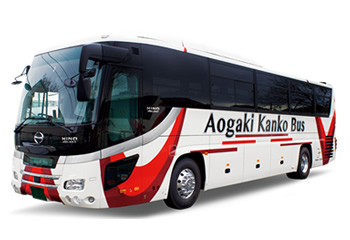
Wheelchair Accessible Bus Sightseeing in Japan
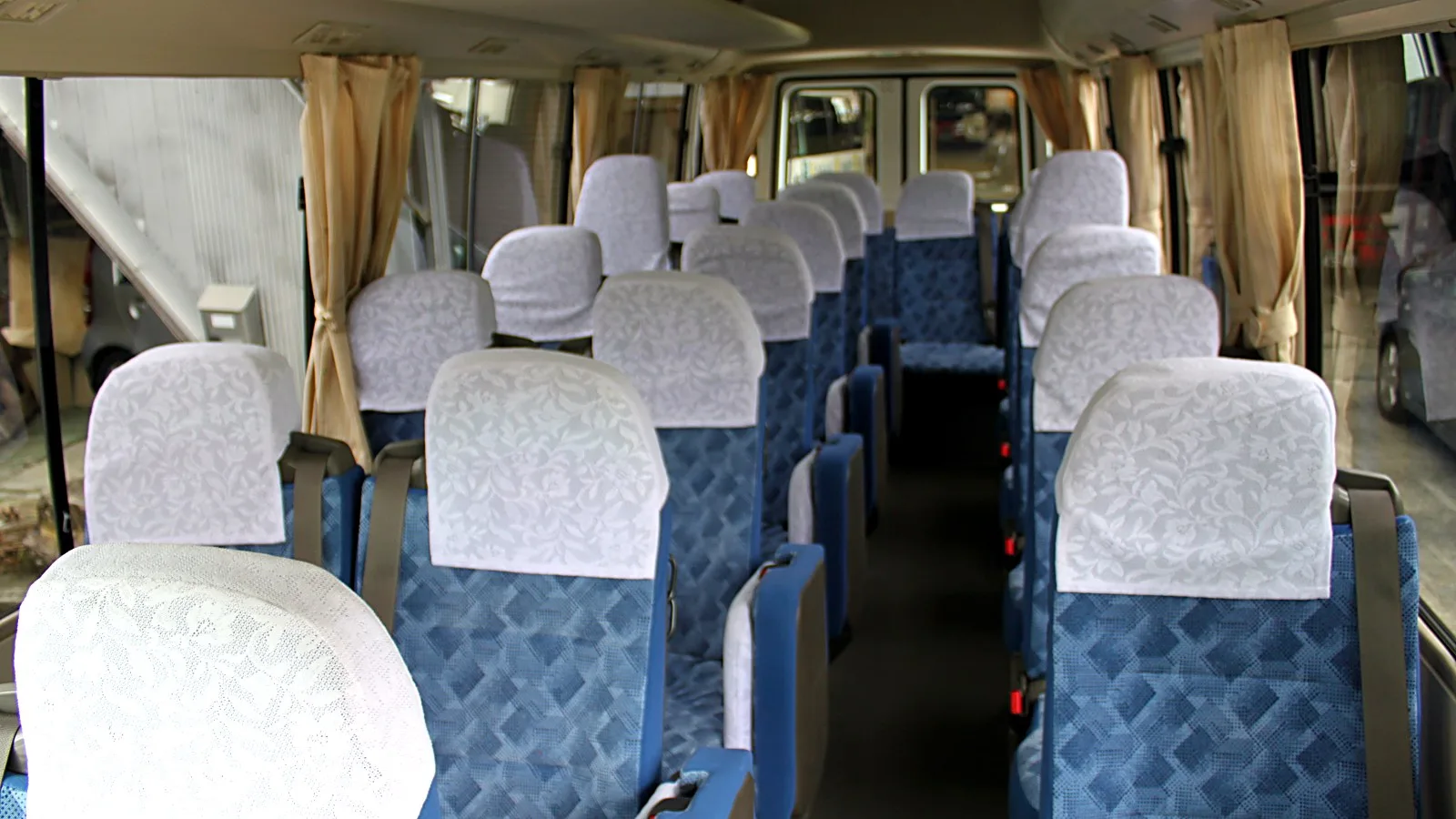
Can Wheelchair Users Tour Japan by Bus? Yes — With a Lift-Equipped Charter Bus

Japan is deeply welcoming for travelers who use wheelchairs. Public buses and standard sightseeing coaches, though, rarely let a passenger stay seated in their own wheelchair for the ride. According to the Japan National Tourism Organization (JNTO), 94% of public buses in Tokyo are equipped to accommodate wheelchair boarding. Long-distance and sightseeing charter buses with a true roll-on lift remain a small share of the fleet nationwide. Aogaki Kanko Bus owns and operates its own lift-equipped vehicles, so a wheelchair user can board without transferring to a regular seat and enjoy the same sightseeing itinerary as the rest of the group.
Tell us your route and party size.
Get a Free Quote ▶
What Does a Wheelchair-Accessible Charter Bus Actually Look Like? Lift Type, Securing System & Capacity

Our wheelchair-accessible bus (lift-equipped vehicles) use a platform-style power lift. It rises from curb height to the bus floor, so the wheelchair never has to be tilted or carried up steps.
- The wheelchair is locked into a floor-track anchor point once on board.
- Four-point securing straps hold it in place for the whole ride.
- The number of wheelchair spaces per vehicle is limited, so please confirm availability with us in advance.
How Does Boarding Work? The Driver Operates the Lift — Companions Assist with the Transfer

Before the trip, we ask guests to share a few details so the crew can plan seating and lift use ahead of time:
- The wheelchair's size and type (manual or electric)
- The number of wheelchair users joining
On the day, the driver parks the bus so the lift has clear, level ground and lowers the platform. Our crew's role covers driving the bus, operating the lift, and fastening the four-point straps once the wheelchair is positioned on board, with a verbal check at each stage before the lift rises. Moving the wheelchair onto the platform and any physical transfer or assistance the passenger needs are handled by the traveling companion, so we ask that a companion able to help with these steps joins the wheelchair user on board. Once the wheelchair is secured, the driver explains the handhold and belt setup before departure. At rest stops, we choose parking areas and facilities with step-free access and accessible restrooms whenever the route allows. The planned itinerary and stops are fixed before departure rather than changed along the way.
Where Can You Start a Wheelchair-Accessible Bus Tour? Osaka & Kansai Airport Departures

Aogaki Kanko Bus operates from three locations — our Tokyo office, our Osaka office, and our Kansai Airport office — but our wheelchair-accessible, lift-equipped buses are based in the Kansai area, at the Osaka and Kansai Airport offices. A charter can depart from either point, making it easy to combine an Osaka day trip with an airport transfer, all in a fully seated, lift-boarded ride.
Group size, wheelchair numbers, and distance all affect planning, so every trip is quoted based on group size and itinerary. Get a Free Quote and let us know your group size and route.
Trains, Taxis & Local Buses vs. Chartered Bus: Which Works Best for Wheelchair Travelers in Japan?
Japan's public network is genuinely strong for accessibility. JNTO reports that 95% of Tokyo's roughly 700 train stations now have step-free passageways and accessible restrooms.
- Shinkansen: comfortable, but each train typically offers only one or two reserved wheelchair spaces. Advance notice to station staff is strongly recommended.
- Local city buses, including some routes in Kyoto: usually only one wheelchair space per bus. A second wheelchair user may be turned away if that space is already taken or the bus is full.
- Taxis: useful for short, solo trips, but many accept only a folded wheelchair rather than someone remaining seated in it.
For a group, or for a full day of sightseeing between multiple stops, a chartered bus with a dedicated wheelchair space for the whole itinerary avoids the uncertainty of space limits at each leg of the journey, for safety and peace of mind.
How to Book a Wheelchair-Accessible Bus: Reservation Flow, Lead Time & Cancellation Policy
To book, simply tell us your group size, the wheelchair's size and type, your travel dates, and the itinerary you have in mind. Pricing is always quoted based on group size and itinerary rather than a fixed rate.
If plans change, our cancellation schedule is:
- 21 days or more before departure: no charge
- 20 to 8 days before: 20%
- 7 to 2 days before: 30%
- The day before: 40%
- On the day itself: 100%
With the lift, the straps, and a seat already waiting, the only thing left to plan is where in Japan you'd like to go next.
A Japanese-speaking party leader must accompany the group on board.