Wheelchair-Accessible, Barrier-Free Group Bus Travel in Japan: What Group Organizers Need to Know

Yes — Wheelchair-Accessible Chartered Buses Are Available for Groups Traveling Together in Japan

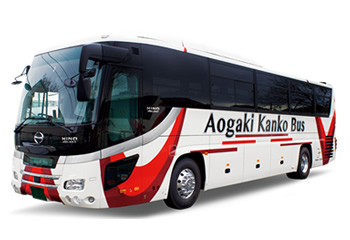
If your senior citizens' group, care facility, or circle of friends includes members who use wheelchairs, we can discuss arranging a full-size chartered coach so everyone travels together. Our lift-equipped coaches are based at our Osaka and Kansai International Airport offices, and departures, pickup, and drop-off are arranged within the Kansai area — this is a Kansai-based service rather than a nationwide dispatch, so it's worth keeping Kansai-area locations in mind as you plan your route. This isn't about renting one small accessible car — it's a large group coach built to carry a mixed group of walking and wheelchair-using passengers side by side, boarding through the same door and riding the same route together.
A lift-equipped coach is built around a wider mid-door entrance. A lift lowers to street level so a wheelchair user can roll straight on board, and the cabin includes a dedicated wheelchair space, grab rails, and a sturdy boarding step for anyone who needs extra support getting up into the vehicle. You can see the general layout of this type of vehicle on our wheelchair-accessible bus (lift-equipped vehicles) page.
Because this type of vehicle is limited in number compared with our standard coaches, it's best to confirm availability for your travel dates as early as possible rather than assuming one will be free on short notice. Reaching out well ahead of your travel dates, with your Kansai-area pickup and drop-off points in mind, gives you the best chance of securing the right vehicle for your group.
How Many Wheelchairs Can Our Group Bring on One Bus?
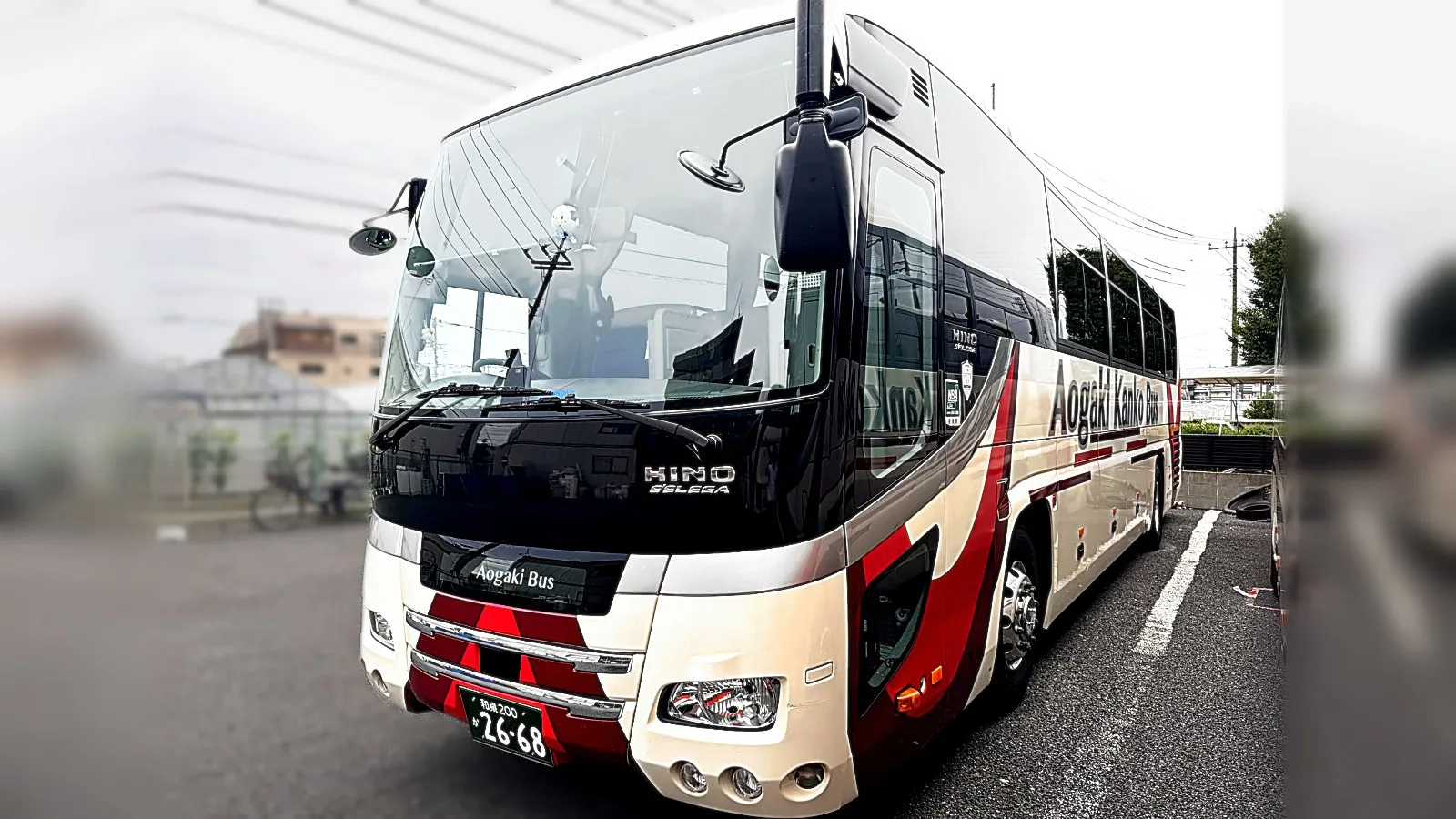
This is one of the most practical questions a group organizer asks. Our large lift-equipped coach is built to carry between one and six wheelchair passengers at a time, with the fixed seating arranged around however many wheelchair spaces your group needs — the more wheelchair positions secured in place, the fewer standard seats remain for ambulatory passengers. For smaller groups, a lift-equipped microbus is also available, with its seat count adjusted the same way depending on how many wheelchairs are traveling.
Because every group's mix of wheelchair users and walking passengers is different, we confirm the exact seat layout for the vehicle we assign to you case by case, based on your group's actual headcount and wheelchair dimensions, rather than quoting one fixed number here.
What Information Should We Prepare Before Requesting a Quote?
Having a few details ready before requesting a quote makes the process faster and more accurate. It helps to prepare: the number of wheelchair users and the approximate size/type of each wheelchair; the number of accompanying caregivers or staff traveling with the group; the total group size, including ambulatory passengers; pickup and drop-off locations, noting any steps, curbs, or steep slopes there; and the overall itinerary, including the departure point, destinations, and any stops along the way.
Because every group's size and route is different, pricing is always arranged as a custom quote based on headcount and itinerary rather than a flat rate. It's also worth planning ahead for communication on the day: since the driver and any on-site staff communicate in Japanese throughout the journey, it helps to have at least one member of the group who is comfortable communicating in Japanese, or a caregiver who can bridge that gap. This is especially worth arranging in advance for care-facility groups and senior citizens' associations.
How Does Boarding Assistance Actually Work on the Day?
On the day of travel, boarding follows a steady, predictable sequence. The bus pulls in and parks at the agreed boarding point, the mid-door lift or ramp is lowered to ground level, and the wheelchair user rolls or is assisted onto the platform. Once inside, the wheelchair is moved into its designated space and secured with the onboard fixing straps, and the driver does a final safety check of the restraints and door before pulling away.
A short photo sequence of this process — the bus stopped with the lift extended, a close view of the wheelchair space and straps, and the driver checking the restraint — is a useful reference for what to expect, and we're happy to walk a group organizer through each step and answer questions beforehand, so nothing about boarding feels uncertain on the day.
Can a Barrier-Free Group Tour Include Sightseeing, Like an Autumn Evening in Kyoto?
Absolutely — a barrier-free group trip doesn't have to be limited to transport alone; it can be built around a genuine sightseeing highlight. One appealing idea for an autumn weekend is an evening visit to a famous Kyoto temple known for its seasonal maple-leaf illumination, when the grounds are lit up after dark for a few weeks each year. Admission for this kind of evening illumination is typically around ¥1,000 for middle-school age and up as a general guide, though the exact fee is set by the temple and can change from one season to the next, so it's worth confirming the current price closer to your travel dates.
For a mixed group that includes wheelchair users, the coach becomes the center of the itinerary: everyone travels together door-to-door, the bus waits nearby during the temple visit, and no one needs to walk long distances between transport and the illuminated grounds. This is only one seasonal idea — similar low-walking, bus-centered itineraries can be built around other destinations depending on your group's interests and schedule, and if a model course like this looks like a good fit, you can Get a Free Quote to see what a lift-equipped coach and route like this could look like for your group.
How Do We Move Forward With Booking a Wheelchair-Accessible Group Bus?
Once you have your group size, wheelchair details, and rough itinerary in hand, the next step is simple: Get a Free Quote, and we'll check availability from our Kansai (Osaka/Kansai Airport) offices and confirm the right vehicle and seat configuration for your group.
For reference, if plans change after booking, our standard cancellation schedule is as follows: no fee up to 21 days before departure, 20% from 20 to 8 days before, 30% from 7 to 2 days before, 40% the day before, and 100% on the day itself. Knowing this in advance makes it easier to lock in a date with confidence while your group finalizes attendance.
From there, it's really just a matter of settling on pickup times within the Kansai area and confirming the details with your group — the bus, the ramp, and the driver will be waiting at the curb on the day, ready to take everyone, wheelchairs and all, out to wherever the trip leads.
A Japanese-speaking party leader must accompany the group on board.